
France + Spain: Loire Valley to Basque Coast
Prices starting at $15,000 per person
From the Loire Valley to the Basque Coast: Châteaux, Cuisine, and the Open Road
Glide from château-dotted riverbanks and Renaissance gems of the Loire to Lyon’s UNESCO-listed quarters, the sunlit lanes of Provence, and onward into the Pyrenees and the Basque Coast. This journey blends art, architecture, countryside charm, and coastal culture, finishing among pintxos bars, modern masterpieces, and Atlantic vistas.
Top 6 Highlights of France + Spain
Loire Valley châteaux & gardens
Stroll storybook estates, riverside villages, and vineyard-lined lanes.Immersive cycling in castle country
Join a guided multi-day ride through quiet roads, wine country, and historic towns.UNESCO Lyon
Explore traboules, hilltop basilicas, and the city that wrote the book on French gastronomy.
High Pyrenees landscapes
Meet Romanesque treasures in the Vall de Boí and wander Aigüestortes’ streams and glacial lakes.French Basque Coast
Trace Belle Époque Biarritz, corsair tales in Saint-Jean-de-Luz, and cliff-hugging scenic roads.Spanish Basque culture
Savor San Sebastián’s old town and Bilbao’s Guggenheim, with coastal villages and dramatic geology en route.
25 Days in France and Spain
-
A private transfer takes you from Paris directly to Tours, the historic capital of the Loire Valley. The drive south follows the river into a landscape of pale stone and poplar-lined banks that sets the tone for the week ahead. A quiet first evening to settle in and get your bearings before the cycling begins.
-
A free day in one of the Loire's most liveable cities before the riding starts. Tours has a medieval quarter — the Place Plumereau and the lanes surrounding it — that rewards slow walking, and a Saturday market that covers the whole of the old town in producers, cheese sellers and charcuterie. The cathedral and the fine arts museum are both worth the time. Consider it a gentle calibration before five days in the saddle.
-
Meet your guides near Château de Villandry, whose Renaissance gardens are among the most meticulously maintained in the Loire — six levels of formal planting descending toward the river, including a kitchen garden that has been producing vegetables in geometric patterns since the 16th century. The first day's riding is easy and deliberate: river paths, quiet lanes, and the first real sense of how well this valley works at cycling pace.
-
The route today follows the Cher River through a softer, more agricultural stretch of the valley before arriving at Chenonceau — the château that spans the river itself on a series of arches, with formal gardens on both banks and a gallery running the full length of the bridge. The history here is largely the history of the women who owned and defended it: Catherine de' Medici, Diane de Poitiers, Louise of Lorraine. The evening rolls into Amboise, where the old town climbs the bluff above the river and the château looks out over the whole valley.
-
The day's route passes through the Vouvray appellation, where Chenin Blanc grown on the tuffeau slopes above the river produces still, sparkling and sweet wines of genuine complexity. Curated tastings with producers who actually know the land they're farming, riverside time in the afternoon, and a leisurely return through vines that have been here since the Romans figured out what this particular stretch of river could do.
-
The morning visits Clos Lucé in Amboise, where Leonardo da Vinci spent the last three years of his life as a guest of François I and where scale models of his inventions — the precursors of the tank, the helicopter, the solar power collector — fill the rooms and gardens. The afternoon takes the backroads through village after village of tuffeau-stone houses before arriving at your next château base through pastoral countryside that has barely changed in centuries.
-
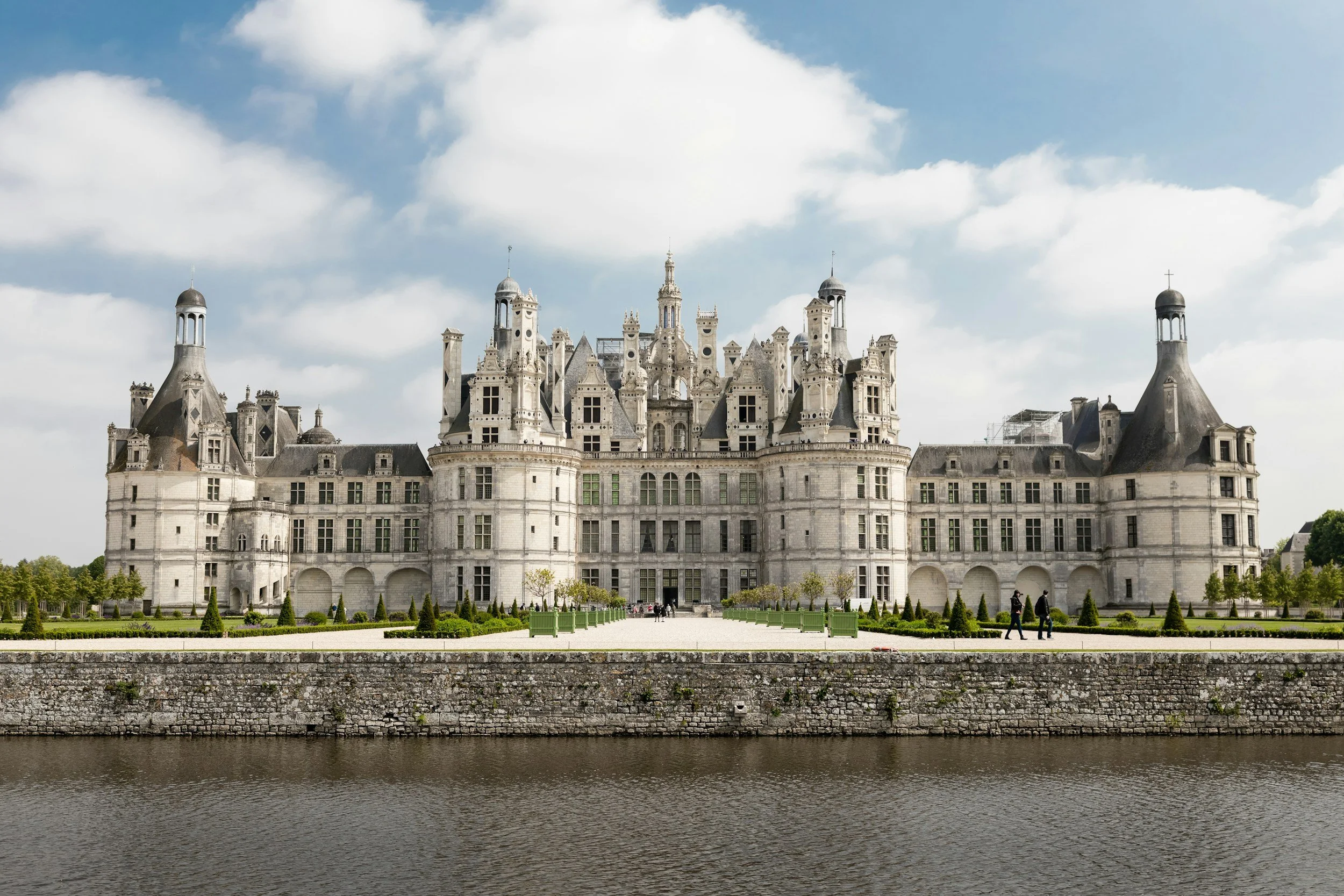
The cycling finale ends at Chambord, François I's hunting lodge scaled up to the point of absurdity — 440 rooms, 365 fireplaces, a double-helix staircase attributed to Leonardo, and a roofline so ornate it functions as its own village skyline. Artisan stops along the way for local produce and a celebratory evening that does justice to five days well ridden.
-
A station farewell with the cycling team before collecting the car and driving south. The journey to Lyon takes around three and a half hours and crosses from the Loire basin into Burgundy and down toward the Rhône — a transition in landscape, light and temperature that you feel somewhere around Mâcon. Lyon by early evening, time to find dinner and begin adjusting to city pace.
-
A morning in Lyon's Vieux-Lyon quarter, the largest Renaissance urban district in France outside Paris and a UNESCO World Heritage site since 1998. The traboules — covered passageways running through the blocks between streets — were used by silk workers to transport fabric without weather damage and later by the Resistance during the occupation. The Marché Saint-Antoine along the Saône for supplies, then the drive south through the Rhône Valley as the plane trees start to appear and the light begins to change into something that painters have been trying to describe accurately for two centuries. Saint-Rémy by late afternoon.
-
Six days at your own pace in the heartland of Provence, based in a town that sits at the foot of the Alpilles and within easy reach of most of what the region does best. Les Baux-de-Provence on its limestone spur. Arles, where Van Gogh produced over 300 works in 15 months and where the Roman amphitheatre still hosts events. The Pont du Gard, a three-tiered Roman aqueduct that has been standing since 19 AD and is still the tallest in the world. The Luberon hill towns — Gordes, Roussillon, Bonnieux — best in the early morning before the day-trippers arrive. Thursday market in Saint-Rémy. Olive oil tastings, rosé from the Coteaux d'Aix, a long lunch in a village square somewhere. The pace here is the point.
-
The drive west crosses the Languedoc and arrives in Toulouse, the Pink City — named for the terracotta brick that almost every building in the old center is built from and that turns the whole place rose-gold in the late afternoon. The Capitole square, the Garonne riverside, and the Canal du Midi beginning its long journey toward the Mediterranean. A good city for a transitional evening.
-
The drive into the Catalan Pyrenees delivers you to the Vall de Boí, a high valley containing nine Romanesque churches built between the 11th and 12th centuries and collectively designated a UNESCO World Heritage site for the quality and completeness of their architecture and fresco programmes. The originals of the frescoes — removed for safekeeping in the early 20th century — are in the National Art Museum of Catalonia in Barcelona; what's in the churches now are high-quality reproductions that give the full picture of what the interiors originally looked like. An easy walk through the Aigüestortes National Park in the afternoon, among streams, glacial lakes and meadows at around 2,000 metres.
-
The Aran Valley is a Pyrenean anomaly — geographically in Spain, culturally and linguistically its own place, with a Gascon dialect called Aranese that has official status alongside Catalan and Spanish. The villages of Bagergue, Unha and Salardú sit within walking distance of each other at the top of the valley, connected by a footpath through hayfields and stone walls. Then the drive north and west, down from the mountains and out to the Atlantic coast and Biarritz — a Belle Époque resort town that was the playground of European royalty in the 19th century and has been reinventing itself as a surf destination ever since, without entirely giving up on the grand hotels and casino architecture that made it famous.
-
The Basque Coast between Biarritz and the Spanish border packs an extraordinary amount into a short stretch of shoreline. Saint-Jean-de-Luz is a working fishing port with a perfectly preserved historic center — it was here that Louis XIV married the Spanish Infanta María Teresa in 1660, an event that ended 24 years of war between France and Spain. The Corniche road between the two countries hugs the clifftops above the Bay of Biscay. Hondarribia sits just across the border: a walled medieval town with a harbor district of brightly painted fishermen's houses that belongs to a completely different visual tradition from anything on the French side.
-
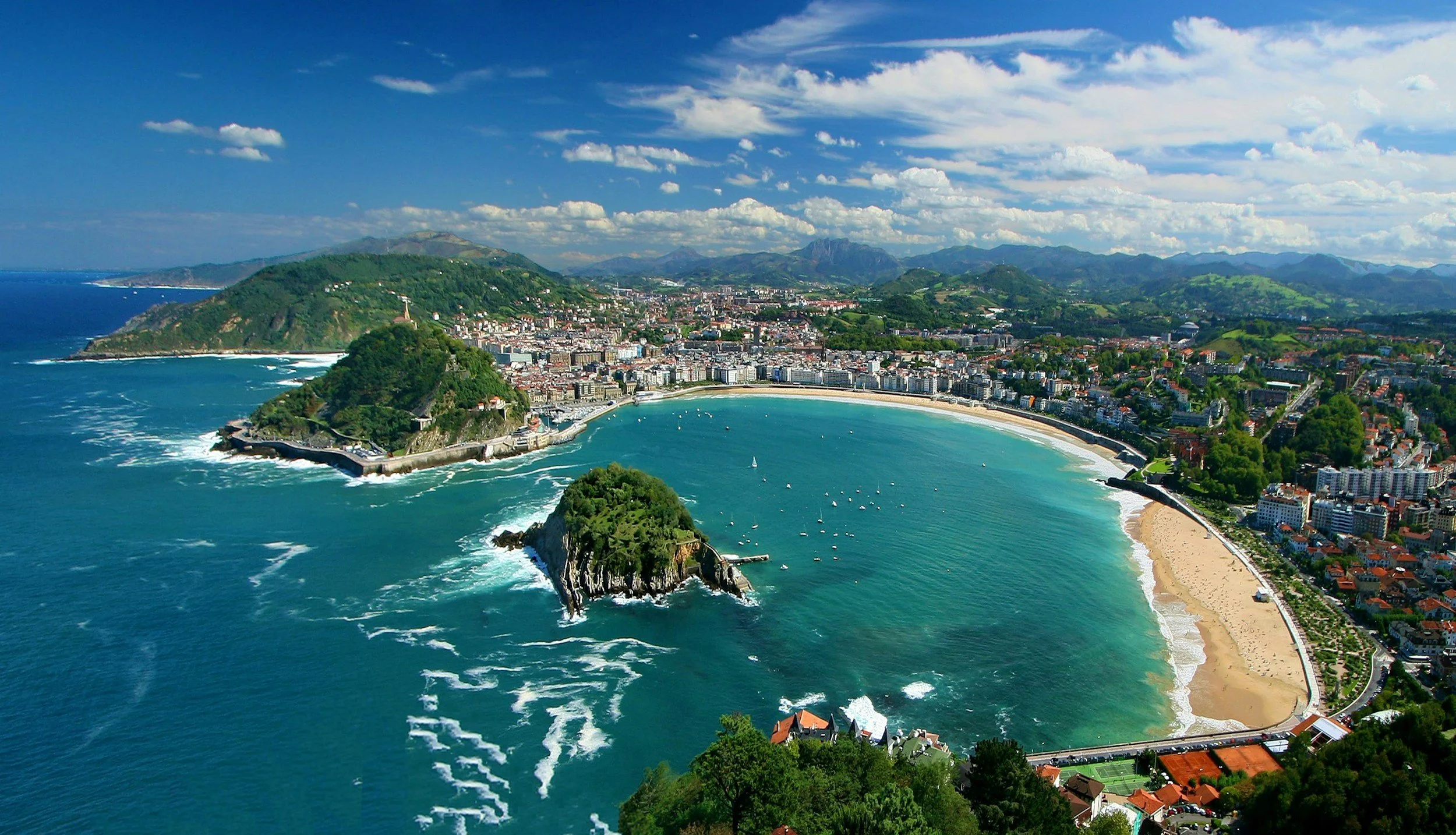
A short coastal hop across the border into Spain and into one of the best food cities in the world. A guided stroll through the Old Town — the Parte Vieja — covers the pintxos bars of Calle 31 de Agosto and the fishing harbor, with enough context on Basque culinary culture to make the eating that follows considerably more interesting. The bay of La Concha is one of the best urban beaches in Europe. The promenade along it is where San Sebastián does its evening paseo, and joining it requires no effort whatsoever.
-
The green hills behind the coast hold a different Basque Country from the one the restaurants made famous. Cheese production in the Idiazabal tradition — smoked sheep's milk, aged in farmhouse cellars — heritage cider houses where txotx season runs from January to April and the cider comes straight from the barrel, and a deep dive into the artisan traditions of a culture that has been producing things carefully and well for a very long time. The landscape is rolling, intensely green and almost entirely overlooked by visitors who don't leave the city.
-
The scenic route takes most of the day and earns it. Getaria is a small fishing harbor that produced both Juan Sebastián Elcano — the first person to circumnavigate the globe — and Cristóbal Balenciaga, who grew up here watching his mother sew and went on to become the most technically rigorous couturier of the 20th century. Gernika carries the weight of April 26th, 1937, when the market town was bombed by Nazi Germany and Fascist Italy in support of Franco — an event that Picasso documented in what became the most politically consequential painting of the century. The flysch cliffs at Zumaia expose 60 million years of geological strata in clean cross-section along the shoreline. Gaztelugatxe, the hermitage on a tidal island connected to the mainland by a stone bridge and 241 steps, at the end of the day. Into Bilbao as the light drops.
-
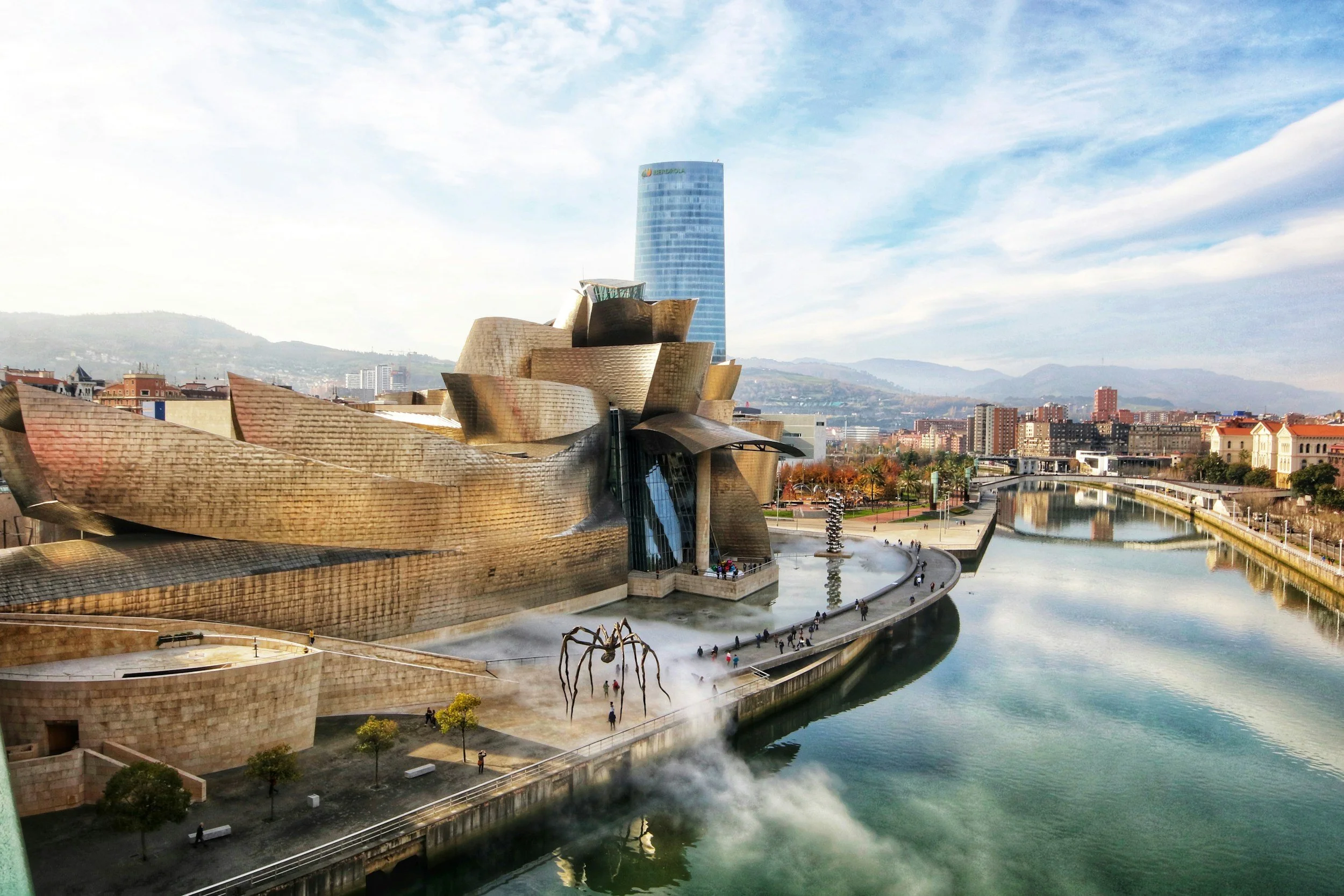
The Guggenheim Bilbao opened in 1997 and effectively demonstrated that a single building could regenerate a post-industrial city — the effect has been studied and imitated everywhere since, with limited success, because the building itself is genuinely extraordinary. Frank Gehry's titanium curves shift color with the light throughout the day and the permanent collection inside is matched by a programme of temporary exhibitions that makes return visits worthwhile. The rest of the day covers the Casco Viejo — the seven original streets of medieval Bilbao, the Mercado de la Ribera, and the ribera bridges that connect the old quarter to the 19th century ensanche across the river.
-
A free day to return to whatever the previous days left unfinished. The Museo de Bellas Artes, which holds its own against most national collections in Europe and is consistently overlooked because the Guggenheim is next door. The seaside tram to Getxo, where the suspension bridge across the Nervión estuary has been operating since 1893. The Mercado de la Ribera on a weekday morning. Or simply a long lunch in the old quarter, working through a txakoli list and deciding which pintxos bar won the week.
-
Private transfer to the airport. À bientôt. Hasta pronto.