Ethiopia: From Ancient Empires to the Wild Highlands
Prices starting at $6,500 per person
A 13-Day Journey Through Ethiopia’s Historic Routes, Highlands & Tribal Valleys
Discover Ethiopia’s living history and breathtaking natural diversity on this 13-day expedition from the rock-hewn churches of Lalibela to the ancient castles of Gondar, the dramatic Simien Mountains, and the tribal villages of the Omo Valley. Along the way, explore sacred monasteries, vibrant markets, and the walled city of Harar, where time stands still and traditions thrive. This is Ethiopia at its richest: ancient, wild, and deeply human.
Top 6 Highlights of Ethiopia
Addis Ababa: The Cultural Capital
Begin your journey in the nation’s vibrant capital. Visit the National Museum (home to the fossil of Lucy!) and explore local landmarks, bustling markets, and sweeping city views from Mount Entoto.Lalibela: The Rock-Hewn Churches
Walk among the monolithic stone churches of Lalibela, carved into the earth over 800 years ago and still in use today. Each chapel tells a story of devotion, artistry, and spiritual endurance.Gondar & the Simien Mountains
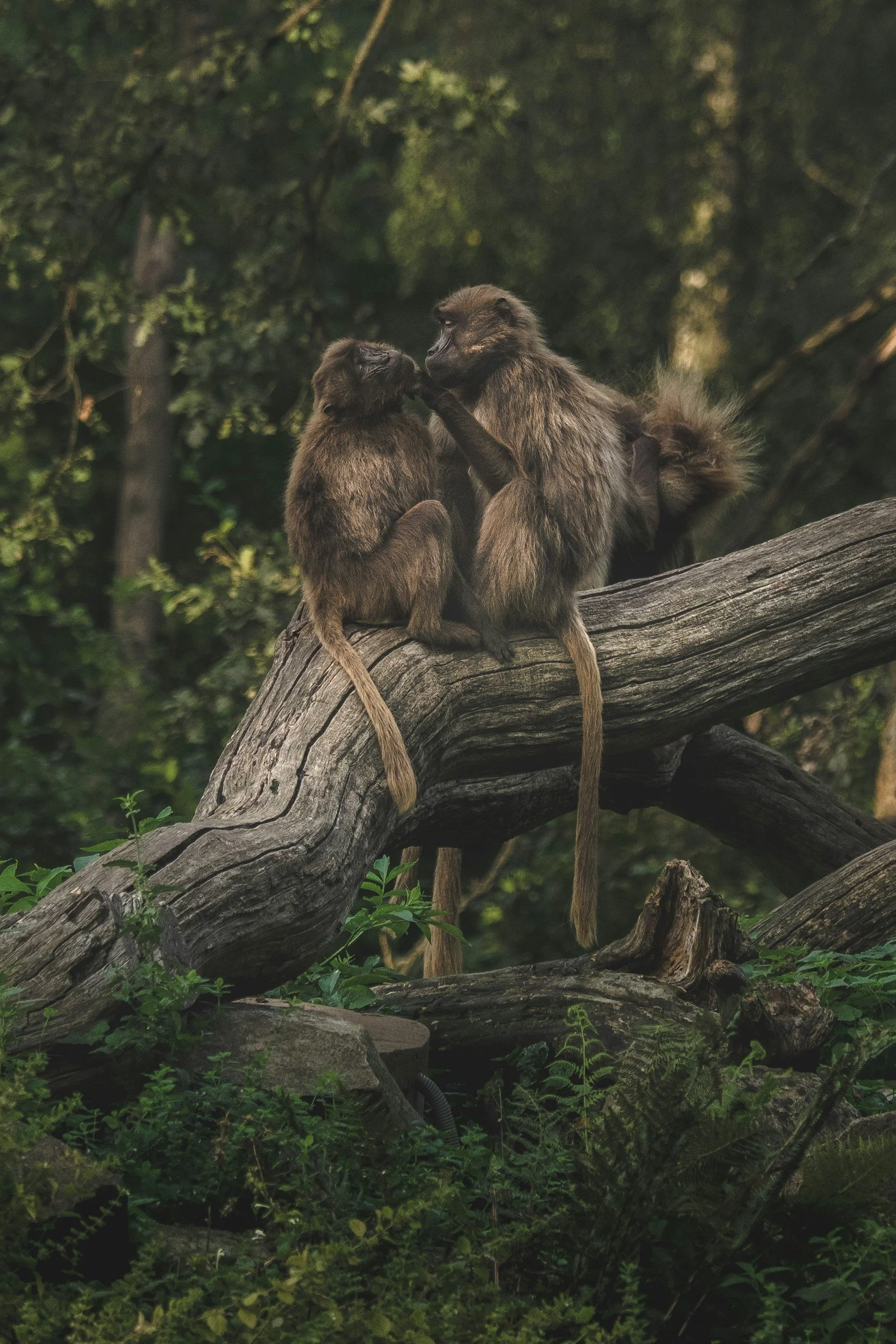
Discover Gondar’s royal castles and frescoed churches before venturing into the Simien Mountains, home to sweeping valleys, deep gorges, and endemic wildlife like the Walia ibex and Gelada baboon.
Lake Tana & the Blue Nile
Cruise Ethiopia’s largest lake to visit island monasteries decorated with centuries-old religious murals, then see the majestic Blue Nile Falls, a natural wonder steeped in legend.Harar: The Walled City
Wander through Harar’s narrow alleys, centuries-old mosques, and bustling Islamic markets. Witness the famed “Hyena Man” feed wild hyenas at dusk, a ritual found nowhere else in the world.The Omo Valley: Tribes of the South
Journey through Ethiopia’s remote south to meet the Dorze, Konso, Hamar, Karo, and Mursi tribes. Experience ancient customs, striking body art, and a living tapestry of cultures preserved across generations.
13 Days in Ethiopia
-
Land at Bole International Airport and go straight into the capital. Mount Entoto sits above the city at 3,200 metres and gives you the geography of Addis before you've learned the streets. The National Museum houses Lucy — the 3.2 million year old Australopithecus afarensis skeleton discovered in the Afar region in 1974 and still one of the most significant paleoanthropological finds ever made. Trinity Cathedral is the most important Orthodox church in Ethiopia and the burial site of Emperor Haile Selassie. Merkato is the largest open-air market in Africa by most measures — chaotic, dense, and genuinely worth the disorientation.
-
The flight north drops you into one of the more extraordinary places on earth. Lalibela's rock-hewn churches were carved directly downward into the volcanic rock in the 12th and 13th centuries, and the scale of the undertaking still defies easy explanation. The first group covers Bieta Medhane Alem, the largest monolithic church in the world, and Bieta Maryam, the oldest of the complex and the one most decorated with carved reliefs and painted ceilings. These are not archaeological sites. They are active places of worship that have been in continuous use for eight centuries.
-
The morning goes up into the mountains to Asheton Maryam Monastery, reachable by mule or on foot along a path that local pilgrims have been walking for generations. The views back over the Lasta highlands from the top justify the climb on their own. Back in Lalibela, the second group of churches leads to St. George's — the most iconic of the complex, carved as a perfect cross-shaped monolith descending eleven metres into the earth and still covered in geometric reliefs that have barely weathered in 800 years. Time in the surrounding villages to understand something of daily life beyond the churches.
-
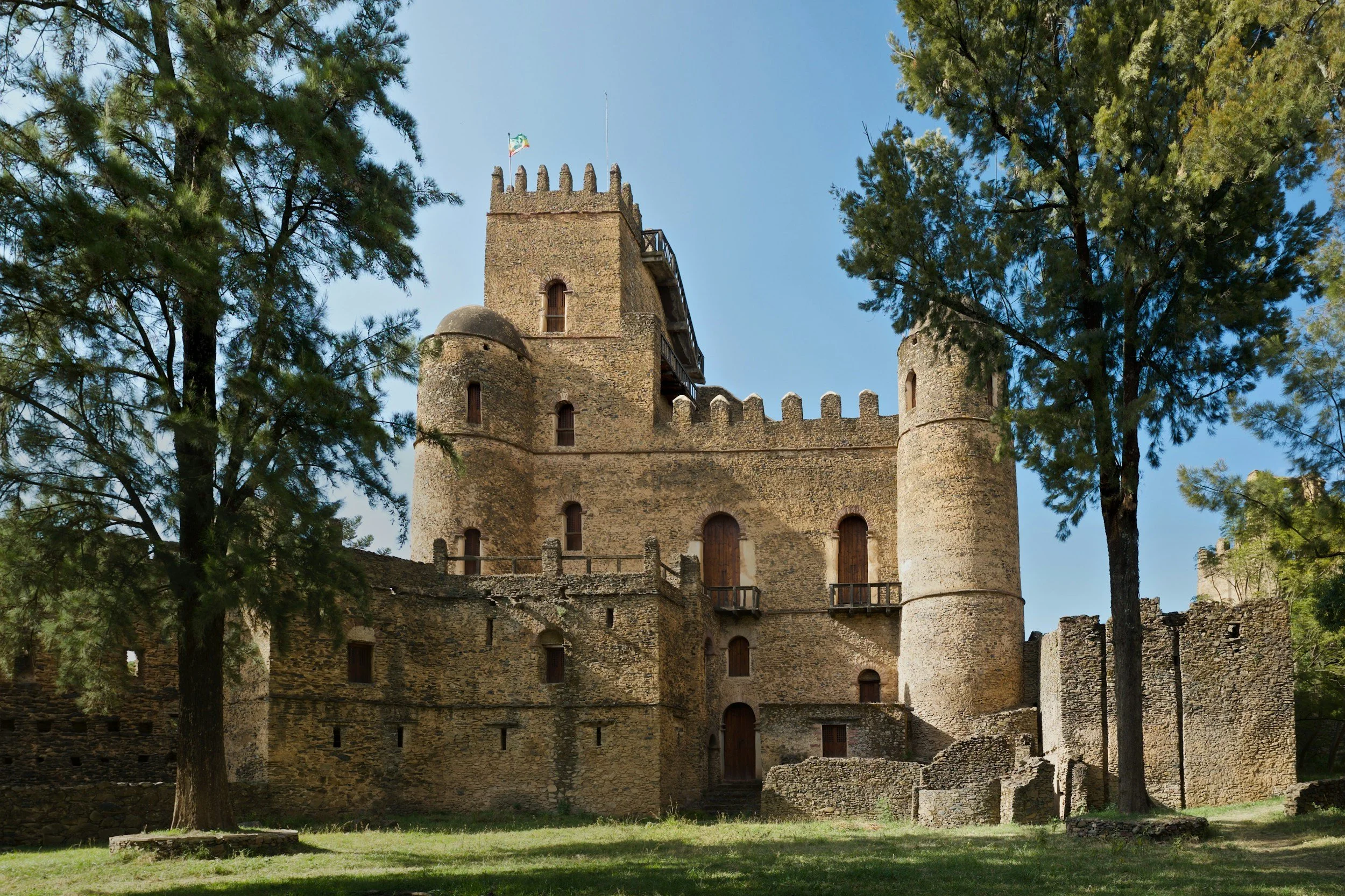
The Royal Enclosure at Gondar is a walled compound of castles and ceremonial buildings constructed between the 17th and 18th centuries by a succession of Ethiopian emperors — an architectural tradition that draws on Portuguese, Indian and local influences simultaneously and looks like none of them entirely. Debre Berhan Selassie Church is the other essential stop: a small building whose entire ceiling is covered in painted cherub faces looking downward, one of the most reproduced images in Ethiopian art and considerably more affecting in person than in photographs.
-
The drive into the Simien Mountains National Park takes you into a UNESCO World Heritage landscape of eroded basalt plateaus and valleys that drop away sharply enough to produce vertigo on a clear day. Gelada baboons — found nowhere else in the world — graze the cliff edges in large troops. Walia ibex and Ethiopian wolves move through the higher ground. The hiking here is serious and the panoramic views across the escarpment justify the early start. Back to Gondar in the evening.
-
The road to Bahir Dar follows the southern edge of the Simien foothills before dropping to Lake Tana, the largest lake in Ethiopia and the source of the Blue Nile. A boat trip out to the Zege Peninsula visits monasteries that have been sitting among the forest on the lake's islands since the 14th century — walls covered in vivid paintings of saints, battles, and biblical scenes in the flat, expressive style of Ethiopian Orthodox art. The lake light in the afternoon is particularly good.
-
The flight east crosses a different Ethiopia entirely — the highlands give way to the arid lowlands of the Somali region as you descend toward Dire Dawa. The drive up to Harar passes the Awaday khat market, where the mildly stimulant leaf that sustains much of the Horn of Africa's daily social life is traded by the tonne every morning. Harar itself is a walled city of 82 mosques in a space barely a kilometre across, and it smells and sounds unlike anywhere else on the itinerary. The evening ends at the hyena feeding — a tradition maintained by specific families in Harar for over 400 years, where wild hyenas come in from the surrounding hills to be fed by hand at the city walls. It is as strange and as memorable as it sounds.
-
Harar Jugol, the old walled city, is a UNESCO World Heritage site and one of Islam's four holiest cities by traditional designation. The 368 alleyways inside the walls form a labyrinth of markets, mosques, shrines, and brightly painted merchant houses. The Arthur Rimbaud House is where the French symbolist poet lived and worked as a coffee and weapons trader after abandoning literature entirely in his mid-twenties — a biographical fact that remains genuinely hard to make sense of, and the small museum inside does its best.
-
A return to the capital for last-minute shopping in the craft markets around Piazza and the Churchill Avenue galleries. The evening is for live music and traditional Ethiopian cuisine — injera, various wats, tej honey wine, and the kind of communal eating that makes sitting down to a meal anywhere else feel slightly inadequate afterward.
-
The flight south covers the full length of the Ethiopian Rift Valley. Arba Minch sits between Lakes Abaya and Chamo — two bodies of water separated by a narrow strip of land known locally as the Bridge of Heaven, with views across both lakes that make the name feel earned. The Dorze tribe live in the highlands above the town in beehive-shaped bamboo houses that can stand up to 12 metres tall and last for decades, relocated periodically as the base is eaten away by termites. The weaving traditions here are among the most distinctive in the country.
-
A morning boat ride on Lake Chamo to see the Nile crocodiles — among the largest remaining populations in Africa — and hippos moving through the shallows. The drive south into the Omo Valley passes through Konso, a UNESCO-listed landscape of terraced hillsides and walled villages that have been continuously inhabited for over 400 years, and Tsemay communities whose cattle-centred way of life has remained largely unchanged across generations. Arrive in Turmi, the heartland of the Hamar people, by evening.
-
The Karo live in small villages along the eastern bank of the Omo River and number only a few thousand people, making them one of the smallest ethnic groups in the valley. What makes them distinctive is their artistic tradition — elaborate body and face painting using white chalk, charcoal, ochre and other natural pigments, combined with scarification patterns that carry social and ceremonial meaning. Time spent with a Karo community along the river is time spent with people who have maintained a visual culture of considerable sophistication in almost complete geographic isolation.
-
The Mursi are among the last groups in Africa where women traditionally wear large ceramic or wooden lip plates, inserted after the lower lip is cut and progressively stretched from adolescence. The practice carries deep cultural significance around beauty, identity and marriageability that outside observers have consistently misunderstood or sensationalised. A visit to a Mursi village with a knowledgeable guide provides the context that makes the encounter meaningful rather than merely striking. The flight back to Addis Ababa connects with your international departure, and a farewell dinner in the capital closes a trip that covers more human history, cultural diversity and landscape variation than almost any other itinerary of the same length anywhere in the world.